
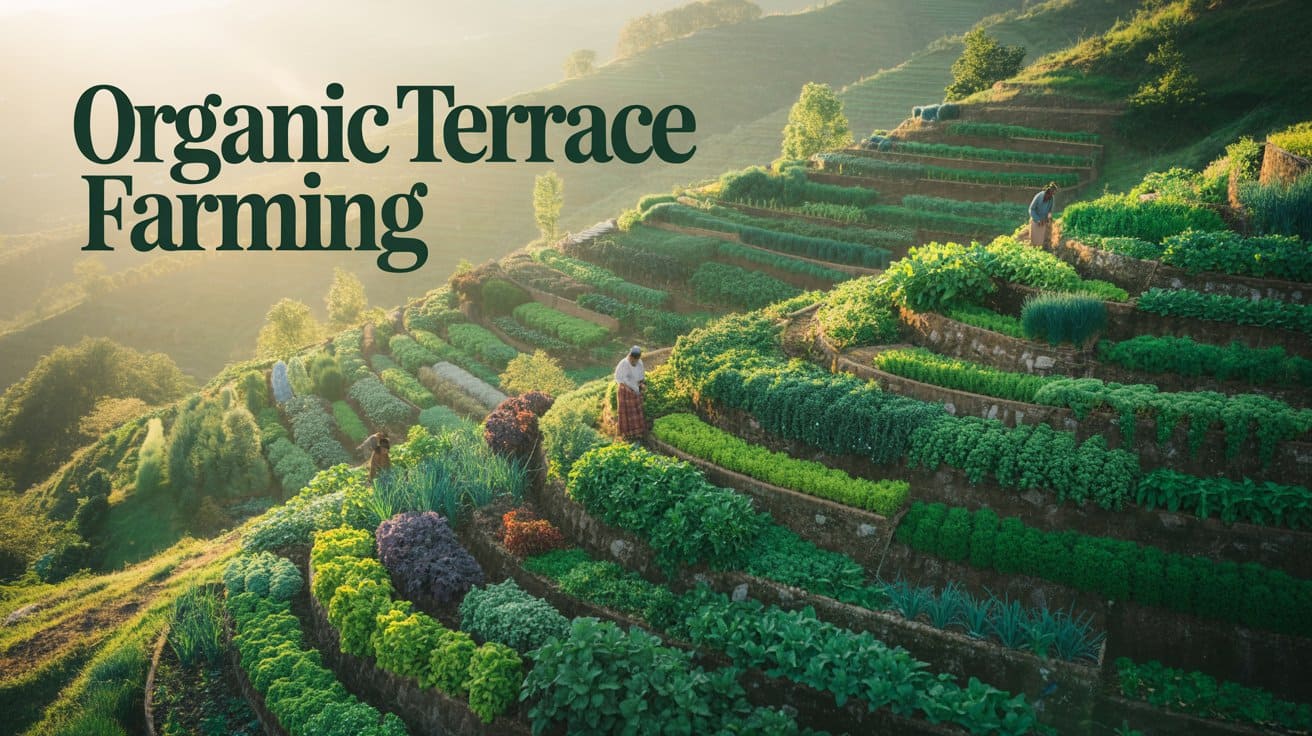
There is something quietly magical about walking up to your rooftop on a Sunday morning, plucking fresh coriander for breakfast and checking on the tomatoes you planted six weeks ago. What was once a bare slab of concrete collecting rainwater and dust has become a living, breathing space that feeds your family every single day.
This is what terrace farming makes possible, and more Indian families are discovering it than ever before.
Across our cities, millions of flat rooftops sit empty. And yet these same spaces, given a little planning and the right approach, can become layered, productive food forests that supply vegetables, herbs, and even fruit entirely without chemicals. If you have been thinking about starting organic farming in your house terrace but did not know where to begin, this guide is written exactly for you.
What Is a Rooftop Food Forest and Why Is It Different from a Simple Terrace Garden
Most people picture a few pots of methi near the railing when they think of a terrace garden. A food forest is an entirely different idea. It borrows from how natural forests actually work, where different plants grow at different heights and quietly support each other through shared nutrients, shade, and natural pest suppression.
On a rooftop, this might look like drumstick trees in large drums along the edges providing windbreak, bitter gourd climbing a trellis to form a canopy layer, bushy brinjal and capsicum filling the middle level in grow bags, leafy spinach and herbs tucked in shallow containers below, and sweet potato or turmeric creeping across exposed soil surfaces to keep moisture in.
The result is not just more food per square metre. It is a rooftop that feels genuinely alive, one that birds visit, that smells of earth and basil in the morning, and that your children will want to spend time in. This is organic terrace farming at home done at its fullest potential, and it is far more achievable than it sounds.
Before Your First Pot: The Structural Check You Cannot Skip
This is the step most beginner guides gloss over, and it is the most important one. A fully planted terrace garden is heavy. Even lightweight potting mixes add up when multiplied across dozens of containers. Add in water, mature plants, and the weight of people moving around to tend the garden, and the load on a slab becomes significant.
Standard RCC terraces in India are typically designed to bear 150 to 300 kilograms per square metre. A large grow bag with a mature tomato plant and moist soil can weigh 30 to 40 kilograms by itself. Clustering heavy containers without knowing your roof’s load distribution is a genuine risk, and not one worth taking.
What you should do before you buy anything: consult a structural engineer or civil professional if you plan to cover a substantial area. Ask specifically where the beams and columns run beneath your terrace surface, because those are your strongest points and where your heaviest containers should sit. Check your waterproofing condition as well. Planting on a cracked or deteriorating waterproofed surface will accelerate damage. If you live in a housing society, confirm whether you need written permission before proceeding.
To keep the load manageable, use fabric grow bags over heavy ceramic or concrete pots. Choose coco-peat-based potting mixes rather than garden soil. Spread containers across the full terrace surface rather than clustering them together. Keep your largest containers positioned over walls and columns, not in the middle of open slab spans.
Understanding Light, Wind, and Heat on Your Rooftop
Rooftops are not like ground-level gardens. They receive more direct sun, more wind, more reflected heat from the concrete floor, and less shelter from temperature swings. Getting to know your specific terrace before planting makes everything that follows easier and more productive.
Sunlight is usually generous up there, which is one of the great advantages of terrace farming. South-facing open terraces receive maximum daily light and suit fruiting crops like tomatoes, chilies, capsicum, brinjal, and gourds that need 6 to 8 hours of direct sun. Areas that are partially shaded for part of the day work beautifully for leafy greens like spinach, methi, coriander, and curry leaf, which actually benefit from some afternoon shade during India’s intense summer months.
Wind is the challenge that most new terrace gardeners do not anticipate until it knocks over a tall tomato plant or dries out three containers overnight. Placing larger plants and trellises along perimeter walls creates a natural windbreak for shorter plants growing behind them. A simple shade net along exposed sides reduces wind speed considerably and moderates afternoon heat at the same time.
Dark-coloured containers absorb heat and can raise root zone temperatures to levels that genuinely stress plants during summer afternoons. Choosing light-coloured or white fabric grow bags, or wrapping dark pots in coconut coir sheeting, makes a real difference without any additional cost.
Building the Right Soil Mix for Organic Terrace Farming
The potting mix you use matters more than almost any other single decision you will make in organic farming in your house terrace. Standard garden soil is completely wrong for containers on a rooftop. It compacts quickly, drains poorly, and creates waterlogged, oxygen-starved conditions that suffocate roots and invite disease.
A good organic potting mix for terrace farming needs to be light enough to work with and not overload your structure, retain moisture between watering sessions without becoming soggy, drain freely so roots never sit in standing water, and contain enough biological life to support plants without any synthetic fertiliser.
A reliable starting mix that works across most vegetables and herbs is one part coco-peat, one part homemade compost or well-rotted vermicompost, and one part perlite or coarse river sand. This combination is lightweight, drains well, holds moisture appropriately, and gives your plants a genuinely living foundation to grow in.
For fruiting crops in larger containers, stir in a small amount of neem cake powder when filling the bag. Neem cake is a natural slow-release fertiliser that also suppresses soil-borne fungal pathogens and nematodes, which matters a great deal in organic terrace farming where the same container soil gets used season after season.
At the start of each new growing season, remove the top two to three inches of old container soil and replace it with fresh compost. This simple habit restores microbial activity and replenishes nutrients without any synthetic input whatsoever.
Choosing Containers: What Works and What Does Not
Fabric grow bags are the best all-round choice for most vegetables and herbs on a rooftop. They are lightweight, affordable, allow air pruning of roots (which produces stronger, more branched root systems than hard containers do), drain freely, and fold flat for storage when not in use. For most vegetables, a 12 to 15 litre grow bag works well. For fruiting crops like tomatoes and brinjal, use 20 to 25 litre bags. For perennial plants like drumstick or curry leaf, repurpose large food-grade plastic drums of 80 to 100 litres.
Terracotta pots are heavy, porous (meaning they dry out very quickly in rooftop conditions), and fragile on concrete surfaces. Reserve them for aesthetics if you love the look, but do not make them the backbone of your terrace farm.
Recycled containers work brilliantly and cost nothing. Old plastic jerry cans, food-grade buckets, wooden crates lined with coco-peat, and large gunny bags all serve as productive growing containers. Whatever container you choose, ensure there are adequate drainage holes at the base, and elevate each container slightly off the terrace floor on bricks or wooden blocks to allow free drainage and protect the waterproofing layer beneath.
Building the Layers of Your Rooftop Food Forest
This is the step where terrace farming at home becomes genuinely exciting. The layered approach is what separates a food forest from a collection of pots, and it is what makes a rooftop space beautiful as well as productive.
The canopy layer consists of your tallest plants and structures. On a rooftop, this typically means trellised climbers like bitter gourd, snake gourd, ridge gourd, bottle gourd, or passion fruit trained over a frame or along perimeter wires, alongside fruiting trees in large drums such as dwarf moringa, guava, lime, or dwarf banana. These create shade and windbreak for the layers below them.
The mid layer is where most of your food production happens: brinjal, tomato, capsicum, chilli, okra, and larger herbs like lemongrass, rosemary, and tulsi. These bushy, productive crops should occupy the majority of your container space.
The ground layer fills in with leafy vegetables and spreading herbs: spinach, methi, coriander, lettuce, amaranth, mint, and basil. Many of these actually prefer the partial shade that the canopy and mid layers create above them, which means nothing on your terrace is wasted space.
The surface layer covers exposed container soil and any gaps between pots with mulch. A thin layer of dry leaves, straw, or coconut husk chips over container soil reduces evaporation dramatically. On a rooftop in Indian summer, an uncovered container can dry out within hours. Mulch is not a cosmetic touch. It is genuinely essential.
You will also need the right tools to maintain all of this well. If you are still putting together your kit, our guide on must-have gardening tools for home organic gardening covers exactly what you need, including what to avoid buying, so you do not waste money on tools that will fail within a season.
Companion Planting for Natural Pest Control
This is one of the topics that separates organic terrace farming at home from conventional container gardening, and it is where things get genuinely interesting. Companion planting means growing certain plant combinations that support each other, sharing the work of pest suppression, pollinator attraction, and soil health without any chemicals involved.
Marigolds planted among tomatoes, brinjal, and capsicum repel whiteflies, aphids, and thrips reliably. They also attract pollinators and look beautiful, so there is no downside. Basil planted near tomatoes deters certain insects and is a classic companion combination used across generations of Indian kitchen gardens. Mint deters cabbage moths and aphids when grown near brassicas, though mint spreads aggressively and must always be contained in its own separate pot. Coriander and dill attract beneficial predatory insects, including wasps and lacewings, that prey on common pests naturally. Turmeric planted around other containers acts as a general deterrent to soil insects.
For pest outbreaks that companion planting alone does not handle, a few organic treatments cover most situations. Neem oil diluted in water with a few drops of plain liquid soap and sprayed on foliage controls aphids, whiteflies, mites, and mealybugs. A decoction made from crushed green chilli and garlic, diluted and strained before spraying, deters most soft-bodied insects. Diluted soap spray smothers aphid colonies within 24 to 48 hours. None of these harm your soil, your beneficial insects, your family, or the food you grow.
Watering: The Habit That Makes or Breaks a Terrace Farm
Water management is the most demanding practical aspect of terrace farming at home, especially in India’s summer months when containers on an exposed rooftop can dry out faster than you expect. Without a reliable watering system, the physical effort alone can wear down even the most enthusiastic gardener by May.
Drip irrigation systems, even simple gravity-fed versions made from standard irrigation tubing and drippers, are genuinely transformative once your terrace has more than 20 containers. They deliver water directly to the root zone, reduce evaporation loss compared to overhead watering, keep foliage dry (which reduces fungal disease pressure), and can run on a basic mechanical timer when you travel.
For smaller setups, a few good habits go a long way. Water between 6 and 8 in the morning. Morning watering gives plants moisture through the heat of the day while allowing any accidental leaf wetting to dry naturally before evening. Evening watering leaves foliage wet through the night, which is ideal weather for powdery mildew and damping off. Mulching every container surface reduces evaporation by up to 60 percent, dramatically cutting down how often containers need attention.
Setting up a simple rainwater collection system using a tank or barrels on the terrace gives you a free supply of chemical-free, naturally soft water. Plants respond to collected rainwater better than treated municipal supply, and for organic farming in house terrace conditions, it is the ideal irrigation source.
What to Grow: A Seasonal Planting Guide
One of the most common early mistakes in terrace farming at home is treating it like a year-round activity without adjusting for seasons. India’s growing calendar is shaped by the monsoon, and working with it rather than against it is one of the most important things you can do.
During kharif season from June to October, the monsoon provides regular water and long days provide ample light. This is your most productive season. Grow tomatoes, brinjal, okra, all the gourds (bitter, ridge, bottle, snake), beans, and chillies. This is the time to make the most of your terrace farm.
During rabi season from October to February, the cooler temperatures and reduced evaporation make growing leafy vegetables easier and more rewarding. Grow spinach, methi, coriander, lettuce, radish, carrot, peas, and cauliflower. Rabi is the most forgiving season for new terrace gardeners.
Through summer from March to May, focus on heat-tolerant crops: drumstick, curry leaf, amaranth, ginger, turmeric, sweet potato, and well-established perennial herbs. Use shade netting to protect more sensitive plants through peak afternoon heat. This is also a good time to set up new containers and prepare soil for the coming kharif season.
Perennial plants that earn permanent space in any rooftop food forest include drumstick, curry leaf, lemon, lime, guava, banana (dwarf varieties), and tulsi. Once established, they require relatively little care and produce harvests across multiple years.
Building Soil Health Over the Long Term
Here is something most terrace gardening articles do not tell you: the single most important thing you can do for long-term success in organic farming in your house terrace is to stop thinking about feeding your plants and start thinking about feeding your soil.
In conventional growing, you apply a synthetic fertiliser, the plant takes it up, and the soil itself stays biologically inert. In organic growing, you feed the soil, and the soil feeds the plant. Over time, this creates a self-sustaining cycle that actually gets easier and more productive with each season rather than more demanding.
In practice, this means maintaining an active composting system. Even a small kitchen waste composter, a basic bin where vegetable peels, tea leaves, fruit scraps, and dry leaves break down together, can produce enough finished compost to refresh two to three square metres of container soil per month. Vermicomposting is even more powerful and ideally suited to apartment and terrace settings. A small worm bin takes up minimal space, produces no significant odour when maintained correctly, and generates both compost and liquid fertiliser simultaneously. The liquid that drains from a vermicompost bin, diluted to a pale tea colour in water, is one of the most effective organic liquid fertilisers you can use in terrace farming.
Having the right tools makes maintaining your compost system and soil care routine significantly easier. Our detailed guide on must-have gardening tools for home organic gardening walks through the specific tools that matter most for organic container growing, including what to look for and what to skip.
Common Mistakes That New Terrace Farmers Make
Using standard garden soil in containers is probably the single most common mistake. It compacts, drains poorly, and becomes waterlogged. Always use a lightweight coco-peat-based organic mix.
Planting without first understanding sunlight patterns on your specific terrace is another one. A spot that gets strong morning sun but full shade by noon is perfect for leafy greens but completely wrong for tomatoes. Spend a few days observing before you decide where everything goes.
Overwatering is often the silent killer of terrace gardens. Roots need both water and oxygen. Consistently soggy soil deprives roots of air and creates ideal conditions for root rot, one of the most demoralising things to deal with in container growing. Always check whether the top inch of container soil is dry before watering again.
Ignoring wind until it knocks over a plant is a rite of passage for most new terrace gardeners. Stake tall plants early, use windbreak netting on exposed sides, and position trellises where the perimeter railing offers some natural protection.
Growing the same crop in the same container season after season builds up soil-borne pathogens specific to that plant family. Rotating crops between containers, moving tomatoes to where beans grew last season, interrupts these cycles naturally and keeps your soil healthier without any chemical treatment.
The Real Reasons This Is Worth Doing
The practical case for terrace farming at home is stronger than most people realise. Experts estimate that one square metre of well-managed terrace garden can produce between 25 and 50 kilograms of vegetables per year. Across even a modest 20 square metre terrace, that represents a meaningful saving against current urban vegetable prices, especially for daily use items like tomatoes, chillies, coriander, and leafy greens.
A rooftop garden also reduces the temperature of the floor below by 6 to 8 degrees Celsius, lowering cooling costs during summer. Plants absorb particulate pollution and carbon dioxide while releasing oxygen. And for families with children, a rooftop food forest is one of the most engaging and educational spaces you can create at home.
But the reason that matters most to most families is control. When you practise organic farming in your house terrace, you know exactly what has been applied to your food. No synthetic pesticides, no chemical fertilisers, no wax coatings, no cold chain residues. What you grow is what you eat, harvested at peak flavour and nutrition, still warm from the morning sun.
Your First 30 Days: A Simple Starting Plan
If you are ready to begin, here is a practical sequence for the first month that keeps things simple and builds confidence quickly.
In the first week, do your structural assessment and walk your terrace at different times of day to observe where the sun falls and where the wind comes from. Identify the strongest points above beams for heavy containers.
In the second week, buy five to ten fabric grow bags in 15 and 25 litre sizes, a bag of coco-peat, a bag of vermicompost, and some perlite or coarse river sand. Mix your organic potting medium and fill your containers. While you are setting up, also check our guide to must-have gardening tools for home organic gardening so you have the right tools from the start rather than improvising with whatever is at hand.
In the third week, plant your first crops. Coriander, methi, spinach, and cherry tomatoes are all reliable and fast-rewarding choices for beginning terrace farming. Observe how quickly your containers dry out and start building a watering rhythm that works for your schedule.
In the fourth week, set up a small kitchen waste compost bin or vermicompost box. It will take two months to produce finished compost, but starting now means you will have homemade organic matter ready exactly when your plants need their first soil refresh.
From this foundation, expand one layer at a time. Add a trellis. Add a large drum for a perennial tree. Add companion flowers between your fruiting crops. By the end of one full growing season, your rooftop will look and feel completely different, and you will have done it entirely on your own terms, with your own hands, growing food you can genuinely trust.
Frequently Asked Questions About Organic Terrace Farming
Is terrace farming safe for the structure of my home?
Yes, if approached thoughtfully. The key is understanding your roof’s load-bearing capacity and distributing weight intelligently. Use lightweight containers and potting mixes, concentrate the heaviest planters over structural beams and columns, and avoid clustering everything in one area. When you are unsure, consulting a structural engineer before you begin costs very little and gives you complete peace of mind.
How much space do I need to start terrace farming at home?
You can begin with as little as 10 to 15 square metres and still grow a meaningful variety. Even a small terrace used intelligently with vertical growing, layered planting, and compact varieties can supply a significant portion of a household’s daily vegetable needs.
Which crops are easiest for beginners starting organic terrace farming in India?
Coriander, methi, spinach, mint, green chilli, and cherry tomatoes are all reliable and forgiving beginner crops for Indian terrace conditions. They grow quickly, tolerate minor watering inconsistencies, and produce harvests fast enough to build real confidence before you move on to more ambitious plants.
How do I manage pests without any chemicals on my rooftop?
Companion planting handles a great deal of pest pressure naturally. For outbreaks, neem oil spray, diluted chilli-garlic solution, and plain soap spray cover the vast majority of common terrace garden pests effectively. Regular inspection every two to three days means you catch problems when they are still small and easiest to address.
Can I grow fruit trees in organic farming on my house terrace?
Absolutely. Dwarf and semi-dwarf varieties of guava, lemon, lime, custard apple, and drumstick all grow successfully in large containers on Indian rooftops. Plant them in 80 to 100 litre food-grade drums with excellent drainage, use a rich organic mix, and feed with compost and neem cake twice a year. Most will produce their first harvest within one to two growing seasons.
How is organic terrace farming different from regular container gardening?
The core difference is philosophy. Conventional container gardening drives plant growth with synthetic fertilisers and manages problems with chemical pesticides. Organic terrace farming builds a living soil ecosystem, composts kitchen waste back into nutrition, uses plant diversity for pest management, and focuses on long-term soil health. Over time, an organic terrace farm becomes more productive and less demanding with each passing season, not the other way around.
Final Thoughts
There is a moment that every terrace farmer describes the same way: the first time you cook an entire meal using food you grew yourself. Fresh tomatoes, green chilli, coriander, maybe even a gourd from the trellis overhead. It tastes different. Not because homegrown food is objectively better in some measurable way, though it often is, but because you made it. Every leaf and every fruit on that plate is the result of your attention, your care, and your decision to work with nature rather than against it.
Organic farming in your house terrace asks for patience in the first season and repays that patience generously in every season after. Start small. Observe carefully. Compost consistently. The rooftop food forest you are imagining right now is more achievable than you think, and the journey toward it is one of the most genuinely satisfying things you can do with a spare Sunday morning and a bag of coco-peat.