
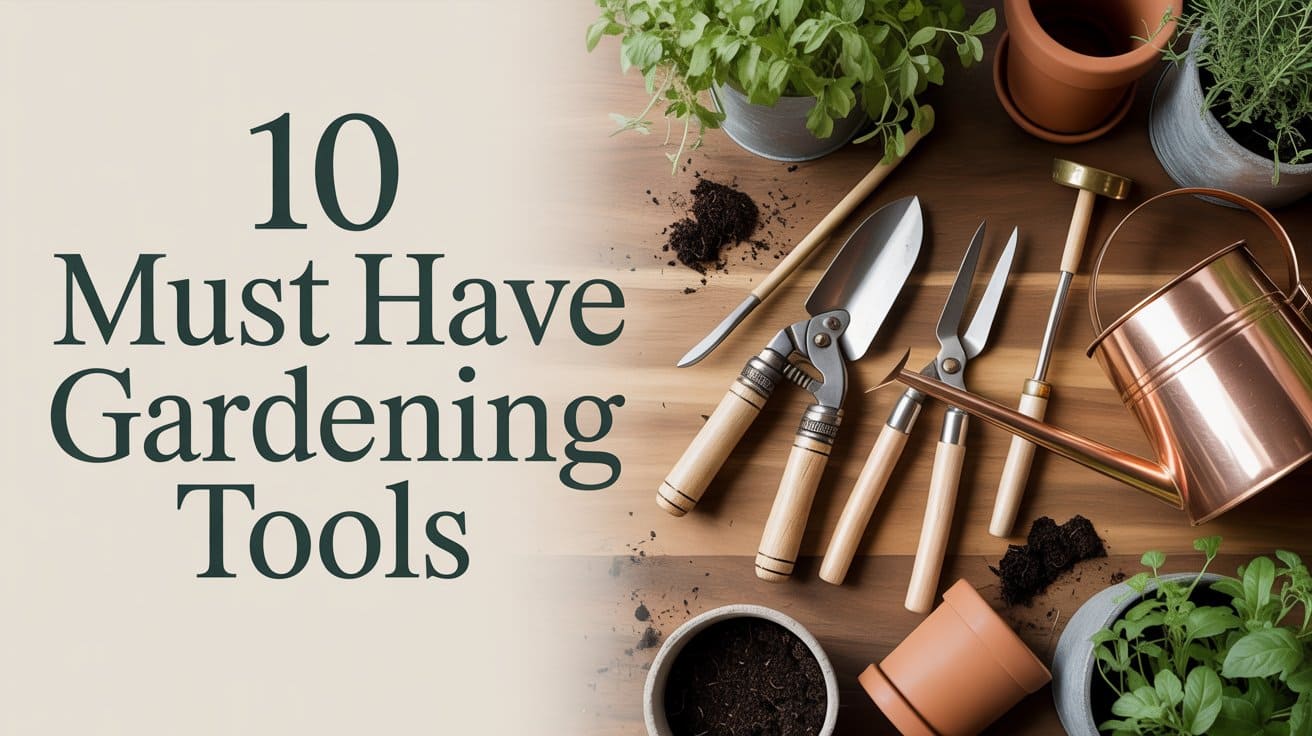
Growing your own food at home without chemicals is one of the most satisfying things you can do. But whether you are a complete beginner or someone who has been digging in the soil for years, one truth stays constant: the right gardening tools make all the difference. Without the correct gardening equipment, even the best seeds in the best soil can produce disappointing results.
This guide covers the 10 must-have tools for home organic gardening in 2025, with organic-specific tips that most blogs leave out. Whether you are setting up raised beds, tending a terrace garden, or working a backyard plot, this list will help you get the most from every season.
If you are just starting your organic journey, also check out our beginner’s guide to organic gardening at Jaivikheti.in for more practical advice on soil preparation, composting, and natural pest control.
Why Gardening Equipment Matters More in Organic Growing
In conventional gardening, chemical inputs can compensate for poor technique. Struggling plant? Apply a synthetic fertiliser. Pest outbreak? Spray an insecticide. Organic gardening does not offer those shortcuts. Every task, from seed planting to harvest, depends on doing things right the first time. That is exactly why the quality and suitability of your gardening tools directly affect your results.
The tools on this list are not just the most commonly recommended. Each one is chosen for how it supports the specific demands of organic, chemical-free home growing.
- Garden Fork
The garden fork is the single most important piece of gardening equipment for any organic grower. Unlike a spade, which cuts through soil and can sever earthworm colonies and fungal networks, a fork loosens and aerates without causing that damage. Healthy soil is a living ecosystem, and a garden fork lets you work it without destroying what makes it productive.
Use it to incorporate compost gently into the top few inches of soil rather than turning the whole bed over. This low-disturbance approach, sometimes called no-till or low-till gardening, preserves the microbial layers that take years to build.
What to look for: Forged steel tines rather than welded, square-shaped tines for better penetration, and a handle length between 28 and 36 inches depending on your height. An ash wood or fibreglass handle will outlast cheaper alternatives.
Pro tip: After the growing season, use your fork to incorporate fallen leaves and compost into the bed gently. Never drive it deeper than 6 inches. Shallow working keeps the beneficial biology intact.
- Hand Trowel with Depth Markings
A hand trowel is the most used gardening tool in any home garden. For organic growers specifically, planting depth is critical. Seeds planted too deep will germinate but die before reaching the surface—seeds planted too shallowly dry out before roots establish. A trowel with measurements etched directly into the blade removes all guesswork.
Correct germination is your first defence in organic gardening. Healthy seedlings need less intervention and are naturally more resistant to pests and disease.
What to look for: A stainless or carbon steel blade with depth markings that are etched, not printed (printed markings wear off within a season), an ergonomic rubber grip to prevent wrist fatigue, and a narrow blade profile for working in tight raised bed spaces.
Pro tip: Between plants, wipe the blade with a cloth dampened in white vinegar. This simple step prevents fungal spores from transferring through your tool from one planting hole to the next, a common cause of seedling failure in organic beds.
- Bypass Hand Pruners
When it comes to pruning and harvesting in an organic garden, the type of pruner you use matters enormously. Bypass pruners have a top blade that slices cleanly past the lower blade, much like scissors. This produces a clean, precise cut that heals quickly. Anvil pruners, by contrast, crush the stem against a flat surface, creating a ragged wound that takes longer to heal and is far more vulnerable to disease.
In organic growing, you cannot rely on synthetic fungicides to clean up after a bad cut. Clean tools and clean cuts are your protection.
According to the Old Farmer’s Almanac’s gardening tools guide, bypass pruners are considered the single most essential cutting tool in any garden, and the quality of the cut directly affects how quickly and healthily a plant recovers.
What to look for: A bypass mechanism only, high-carbon or Cr-Mo steel blades, a sap groove to prevent the blade from sticking, and a safety lock. Replaceable blades are worth paying extra for.
Pro tip: Dip the blades in isopropyl alcohol between plants, especially when moving between healthy plants and any that show signs of stress or disease. One infected cut can spread bacterial or fungal problems across an entire crop bed.
- Hori-Hori Knife
The hori-hori is a Japanese garden knife that functions as a trowel, a weeder, a soil probe, and a planting knife all in one. The name comes from the Japanese word for “to dig.” It has one serrated edge and one smooth edge, plus depth markings along the blade. For organic home gardeners, this tool is especially valuable for removing tap-rooted weeds like dandelions completely, including the full root, without disturbing the surrounding soil or neighbouring plants.
In organic gardening, incomplete weed removal is a constant problem. Chemical herbicides are not an option, so physical removal must be precise. The hori-hori makes that precision possible.
What to look for: A full-tang forged steel blade (avoid hollow handles, they flex under pressure), one serrated and one smooth edge, a blade length of 6 to 7 inches, and a leather or rubber sheath for safe storage.
Pro tip: In polyculture beds where multiple crops grow close together, the hori-hori lets you harvest garlic, leeks, or root vegetables without disturbing the plants growing immediately next to them. No other single gardening tool offers that combination of precision and versatility.
- Stirrup Hoe (Oscillating Hoe)
Weeds are the biggest ongoing challenge in chemical-free home growing. A stirrup hoe, also called a hula hoe or oscillating hoe, is the most effective organic weed management gardening tool available. Unlike a standard hoe that only cuts on the push stroke, the stirrup hoe cuts on both push and pull. Its looped blade slices weed seedlings just below the soil surface, and the cut roots are left exposed to dry out in the sun.
This is one of the best gardening tools for reducing labour without compromising organic principles.
What to look for: An oscillating blade (the loop should rock slightly as it moves through soil), a carbon steel blade that can be resharpened, a blade width of 5 to 7 inches for standard garden beds, and a handle long enough to work comfortably upright without bending.
Pro tip: The most important timing rule in organic weed management is to hoe early. When weed seedlings are at the “white thread” stage, barely visible as hair-thin sprouts, a single pass of the stirrup hoe kills hundreds of them in minutes. Wait until they are 2 inches tall, and the task becomes significantly harder. Hoe after light rain when the soil surface is damp but not waterlogged for best results.
-
Watering Can with Detachable Rose Head
How you water your organic garden is just as important as how much you water. Using a strong stream of water splashes soil onto leaves, and with that soil comes soil-borne pathogens that can infect plant tissue directly. A watering can fitted with a fine rose head delivers water as a gentle shower, landing at the base of plants and keeping foliage dry.
Dry foliage is one of the most important factors in preventing fungal disease in organic gardens. Powdery mildew, botrytis, and damping off all thrive when foliage stays wet overnight.
What to look for: A detachable rose head (so you can remove it for established plants in dry weather), a brass or copper rose for finer spray quality and natural antimicrobial properties, a minimum 2-litre capacity, and a long spout to reach deep into raised beds without leaning over.
Pro tip: Water in the early morning between 6 and 9 AM. Morning watering gives any accidental leaf moisture time to evaporate naturally before nightfall. Evening watering, by contrast, leaves foliage wet through the night when conditions are ideal for fungal development.
- Compost Bin or Tumbler
A compost system is not just gardening equipment. It is the foundation of the entire organic growing approach. Compost returns nutrients to the soil in a slow-release, plant-available form. It improves soil structure, feeds beneficial soil organisms, increases water retention, and suppresses certain soil-borne diseases through what soil scientists call “compost suppression.” Without a compost system, organic gardening requires constant purchased inputs. With one, your garden becomes largely self-sustaining over time.
For beginners setting up their first compost system, we have a step-by-step composting guide covering materials, ratios, and troubleshooting specifically for Indian home gardeners.
What to look for: A tumbler produces compost in 4 to 8 weeks compared to 4 to 6 months for a static bin, making it the better choice for active home gardeners. Look for a minimum 50-litre capacity, adequate ventilation holes for aerobic decomposition, and a rodent-resistant base if pests are an issue in your area.
Pro tip: Use a layering approach: alternate brown materials (dry leaves, cardboard, straw) with green materials (kitchen vegetable scraps, fresh grass clippings, spent garden plants). This carbon-to-nitrogen balance is what produces hot, fast compost. A hot compost heap also kills most weed seeds, which is a significant benefit in organic gardening.
What not to compost: Diseased plant material, cooked food, meat, or dairy. Diseased material spreads pathogens. Meat and dairy attract rodents. Seeds and roots from aggressive perennial weeds should also be excluded unless your pile consistently reaches above 60 degrees Celsius internally.
- Garden Kneeler or Knee Pads
Ergonomic gardening equipment rarely gets the attention it deserves until the gardener’s knees or back give out. Organic home gardening involves a great deal of close-up ground-level work: hand weeding, thinning seedlings, applying mulch, and the kind of careful pest inspection that chemical-free growing requires. Without proper knee protection and support, this work causes chronic discomfort that leads many otherwise enthusiastic gardeners to quit.
A quality garden kneeler is an investment in how long you will actually keep gardening.
What to look for: At least 2 inches of foam thickness for real cushioning, a dual-purpose design that converts between a kneeling pad and a low seat, side handles to help you stand up and kneel safely, and a waterproof or quick-drying cover surface.
Pro tip: Use your kneeler for pest inspection sessions. Getting low and comfortable lets you look carefully under leaves for aphid colonies, check soil surfaces for slug eggs, and spot the earliest signs of mildew or blight. In organic growing, catching problems at this stage is far easier than managing them once established.
- Soil pH and Moisture Testing Kit
Most gardening tool lists skip this one entirely. For organic growers, it is arguably the most important diagnostic item you can own. Soil pH determines which nutrients are chemically available to plants. Even a perfectly built organic soil with rich compost and healthy biology will lock out key nutrients if the pH drifts outside the ideal range of 6.0 to 7.0 for most vegetables. Without knowing your soil pH, you are working in the dark.
Organic corrections, such as wood ash to raise pH or sulphur to lower it, work slowly over weeks and months. Testing in advance gives you time to act before planting season.
What to look for: A 3-in-1 combination meter covering pH, moisture, and light gives excellent value for home gardeners. For more precise results, a digital pH meter with a replaceable probe is worth the additional cost. An annual professional laboratory soil test is also worth doing every few years to get a full nutrient profile.
Pro tip: The moisture function of a combination tester prevents overwatering, which is one of the most common causes of root rot and fungal problems in home organic gardens. Rather than guessing or checking on a schedule, a 30-second test tells you whether plants actually need water that day.
- Hand Pump Pressure Sprayer (1 to 2 Litres)
In organic home growing, prevention and early treatment replace chemical rescue. A quality hand pump pressure sprayer is your delivery system for all organic interventions: neem oil solution for pests, diluted soap spray for aphids, compost tea for foliar feeding, copper-based fungicide for blight, and seaweed extract for root stimulation. Without a reliable sprayer, applying any of these treatments evenly, especially to the underside of leaves where most pests and fungal spores originate, is nearly impossible by hand.
As noted in the UC Marin Master Gardeners resource on essential garden tools, consistent and targeted application is critical when relying on organic pest management, and the quality of your sprayer directly determines whether your treatments reach the right places.
What to look for: A 1 to 2 litre capacity (large enough for a full application, light enough to carry comfortably), a brass or stainless steel nozzle with an adjustable pattern from fine mist to direct stream, a pressure lock for continuous spraying without repeatedly pumping, and a wide-mouth opening for easy filling and cleaning.
Pro tip: Always clean your sprayer thoroughly between different organic treatments. Residual neem oil can reduce the effectiveness of compost tea applied through the same sprayer shortly after. Copper fungicide residue can harm the beneficial bacteria in biological sprays used next. A 10-minute rinse and shake with clean water between uses is enough.
What to avoid: Cheap all-plastic sprayers with unsealed metal fittings. They corrode quickly when used with acidic organic treatments such as vinegar-based sprays or copper sulphate solutions. A quality sprayer purchased once will last for many growing seasons with basic care.
Quick Buying Guide for Organic Gardening Tools
Prioritise quality over quantity. A cheap 20-piece gardening equipment set will almost always include tools made from materials that break within one or two seasons. Start with five quality gardening tools and add to your collection gradually as your garden grows.
Check the material. For organic gardens, avoid galvanised metal tools where possible since the zinc coating can leach into soil over time. Carbon steel, stainless steel, and copper are the best options for blade tools. For handles, ash wood is traditional and repairable; fibreglass is stronger and more weather-resistant.
Maintain what you buy. After each use, brush off soil and wipe blades with a lightly oiled cloth. Store tools hanging rather than standing blade-down, which prevents both handle rot and blade dulling. Sharpen cutting edges at the start of each growing season. A sharp stirrup hoe cuts weed seedlings cleanly. A dull one pushes them aside, and they regrow.
Frequently Asked Questions
What are the most essential gardening tools for an organic beginner?
Start with five: a hand trowel, bypass pruners, a garden fork, a watering can with a rose head, and a stirrup hoe. These cover the majority of tasks in a home organic garden throughout an entire growing season. Add a compost bin, soil testing kit, and pressure sprayer once your garden is established.
What makes gardening equipment for organic growing different from conventional tools?
Organic gardening requires tools that support soil biology rather than override it. Every action, from loosening soil to applying treatments, should minimise harm to the beneficial organisms living in and around your plants. This means favouring tools that disturb soil minimally, cut plants cleanly, and deliver organic sprays precisely. Conventional gardening can rely on synthetic inputs to compensate for poor technique. Organic growing cannot.
How much should I spend on gardening tools as a home organic grower in India?
A quality starter set of five essential gardening tools will typically cost between Rs. 2,500 and Rs. 6,000. This is a one-time investment that, with proper care, lasts for many seasons. Very cheap sets in the Rs. 500 to Rs. 800 range break within a season or two and become false economy over time.
Do I need different gardening tools for raised beds compared to ground-level beds?
Raised beds benefit from shorter, narrower tools since you are working in a confined, deep space. A slim-bladed trowel works better than a wide spade. A narrow oscillating hoe is preferable to a broad Dutch hoe. The hori-hori knife works equally well in both contexts and is one of the few single tools that adapts seamlessly to both formats.
Which gardening tools work best for Indian soil and climate conditions?
For India’s varied soil types, from heavy black cotton soil to light alluvial loam, a forged steel garden fork is essential for breaking compaction without damage. A watering can with a detachable rose head is particularly important through summer months to avoid scorching seedlings. A compost tumbler works exceptionally well in India’s warmer climate because the ambient heat naturally accelerates decomposition without any additional effort.
Final Thoughts
The right gardening tools do not just make tasks easier. They make the organic approach genuinely possible. Without the correct gardening equipment, organic home growing becomes a frustrating uphill challenge. With it, every season becomes more productive, more enjoyable, and more in tune with the way nature actually works.
You do not need every tool on this list before you begin. Start with a quality fork, trowel, and watering can. Add the best gardening tools for your specific tasks as your garden grows. Build your toolkit the same way you build your soil: gradually, thoughtfully, and with the long game in mind.