
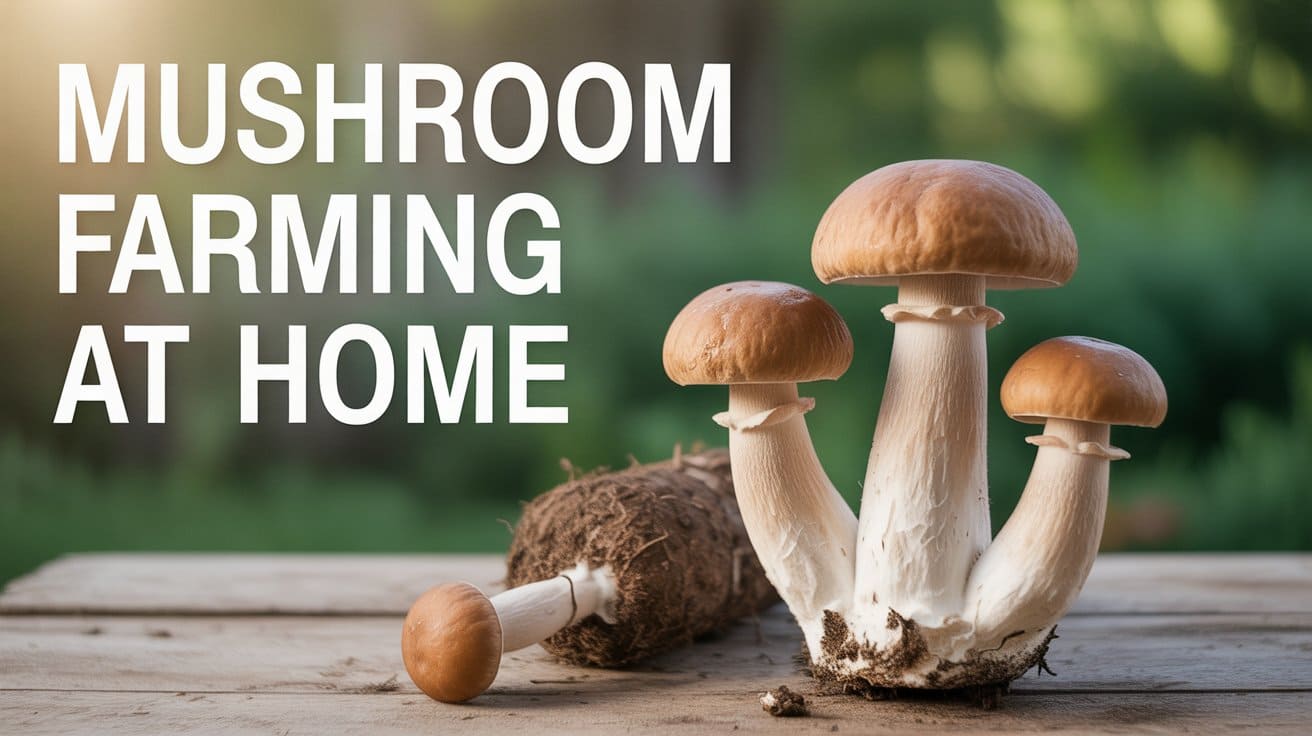
Have you seen the price of mushrooms these days? ₹200-300 for just 200 grams of button mushrooms, and don’t even get me started on oyster or shiitake; those fancy ones can cost up to ₹800 per kilo.
I remember standing in the vegetable market in Bangalore, staring at a tiny packet of mushrooms, thinking, “Seriously? For this price?” That’s when I decided to try mushroom farming at home.
And here’s what I discovered: growing mushrooms in India is actually EASIER than most places in the world. Why? Because our climate, humidity, and even our kitchen waste are perfect for mushroom cultivation. But most guides you’ll find online are written for cold countries where people have basements and dehumidifiers.
This is different. This is for us for Indian homes, Indian kitchens, Indian budgets, and our unique seasons.
Let me share everything I learned over the past two years of mushroom farming at home, including the mistakes I made (contamination during Mumbai monsoon—what a disaster!), the money I saved, and the tricks that actually work in Indian conditions.
Why Should You Start a Mushroom Farm at Home?
Forget the fancy reasons. Let’s talk practical benefits of starting a mushroom farm at home:
Money Saved:
- Market price: ₹250-400 per kg for basic mushrooms
- Your cost: ₹40-80 per kg after setup
- My friend Priya in Pune grows 2-3 kg monthly with mushroom farming in home, saving ₹5,000+ per year
- That’s a nice Diwali bonus, no?
The Real Benefits: You know how we Indians love fresh food, right? Taza sabzi, taza mushroom—there’s no comparison. Store-bought mushrooms have been sitting around for days. Yours? Picked and cooked within hours.
Plus, imagine telling your neighbours you’re growing your own mushrooms. The aunty next door will be so impressed! Mine now asks for tips about mushroom farming at home every week.
Time Investment (Honest Truth):
- Initial setup: One afternoon (3-4 hours)
- Daily care: 10-15 minutes (less time than making chai!)
- Weekly maintenance: 30 minutes
That’s it, no daily watering like your tulsi plant. No constant attention like your kitchen garden. Mushroom farm at home operations are surprisingly low-maintenance.
Understanding Indian Seasons for Mushroom Growing
This is HUGE, and nobody talks about it. Our seasons are perfect for mushrooms, but you need to know which season works for which variety when doing mushroom farming in home.
Monsoon (June-September) – THE BEST TIME: This is a mushroom paradise in India! High humidity, moderate temperatures, and lots of moisture in the air. I do 60% of my mushroom farming at home during the monsoon.
Best mushrooms for monsoon:
- Oyster mushrooms (they LOVE this weather)
- Milky mushrooms (doodh mushroom)
- Paddy straw mushrooms
Pro tip: Just manage ventilation properly, otherwise you’ll get more mold than mushrooms in your mushroom farm at home. Ask me how I know.
Winter (October-February) – EXCELLENT: Cool mornings, pleasant days—perfect! This is when I grow shiitake and button mushrooms. In North India, this season is absolute gold for mushroom farming in home.
What works:
- Shiitake mushrooms
- Button mushrooms (white button mushroom is easiest)
- Oyster mushrooms still work great
Delhi NCR folks: Your winters are perfect for this. That spare room that stays cool? Perfect mushroom farming at home space
Summer (March-May) – THE CHALLENGE: Not going to lie—Indian summers are tough for mushrooms. But mushroom farm at home operations are not impossible! You just need to be smart about it.
Summer strategies that work:
- Grow in the coolest room (usually an inner bedroom with AC running for the family)
- Early morning care (before the heat sets in)
- Grow milky mushrooms (they tolerate heat better)
- Use a cooler or AC room if possible
My cousin in Ahmedabad grows mushrooms even in 42°C summer by keeping his mushroom farm at home set up in his AC bedroom. Family thinks he’s crazy, but he gets fresh mushrooms.
Setting Up in Indian Homes: Real Space Solutions
Forget big basements (most of us don’t have them!). Let’s talk about the spaces we actually have for mushroom farming at home.
Balcony Corner (Most Common): Perfect if you have a covered balcony that doesn’t get direct sunlight. This is the easiest spot for mushroom farming in home.
What you need:
- One corner (just 2×2 feet)
- Plastic sheet for monsoon protection
- Old newspapers for covering
- Spray bottle from any ₹20 shop
Cost: ₹50-100 setup. Best for: Oyster mushrooms, beginners
Bathroom Corner (Seriously): I know it sounds weird, but hear me out. Bathrooms have humidity and shade exactly what mushrooms need! My friend Rahul in Chennai grows oyster mushrooms in his rarely-used bathroom for his mushroom farm at home. Works brilliantly.
Just keep them away from direct water splashing and maintain cleanliness.
Under the Kitchen Sink: That dark cabinet under your sink? Perfect spot for mushroom farming at home! Cool, dark, and protected. Just ensure proper ventilation by opening the cabinet twice daily.
Spare Room or Store Room: If you have that one room that’s always cool and slightly damp? Jackpot! This is your mushroom farming in home space.
Terrace (Covered Area): For terrace growing, you MUST have shade. Direct sun will cook your mushrooms. Use a corner with a shade net or under the water tank structure for your mushroom farm at home.
Budget Breakdown: Indian Prices
Let me give you REAL prices for starting mushroom farming at home, not some converted dollar amounts that make no sense.
Budget Tier 1: The Experiment (₹200-400)
- One oyster mushroom kit from a local vendor: ₹200-300
- Spray bottle: ₹20
- Plastic cover or old container: ₹50-100
- Total: ₹300
This gets you 500g-1kg of mushrooms. Perfect for testing if you like mushroom farming at home.
Budget Tier 2: Serious Home Growing (₹1,200-1,800)
- Mushroom spawn (multiple varieties): ₹300-500
- Substrate materials (wheat straw, paddy straw): ₹200-300
- Plastic bags and containers: ₹150-250
- Small humidifier (optional): ₹400-600
- Thermometer: ₹100
- Total: ₹1,500
This mushroom farm at home setup produces 3-5 kg monthly once established. Your investment returns in 2-3 months!
Budget Tier 3: Mini Mushroom Business (₹3,000-5,000) Everything from Tier 2, plus:
- Better storage containers: ₹500
- Multiple spawn varieties: ₹800
- Pressure cooker for sterilisation (if you don’t have one): ₹1,500
- Shelving unit: ₹800
- Total: ₹4,000
Can produce 10-15 kg monthly with this mushroom farming in home setup. Some people even sell to neighbours
Monthly Running Cost: ₹150-300 per month (mainly substrate and spawn). That’s less than a single kg of store mushrooms!
Which Mushrooms to Grow in India?
Let’s talk about varieties that actually work in our conditions for mushroom farming at home.
Oyster Mushrooms (Dhingri) – START HERE: This is your best friend. Fast (10-14 days), forgiving of mistakes, and sells for ₹300-400/kg in markets.
Indian varieties:
- Grey oyster (most common)
- Pink oyster (looks beautiful, great for monsoon)
- Yellow oyster (slightly nutty taste)
Button Mushrooms (White/Brown) – THE CLASSIC: Everyone knows this one! Takes longer (25-30 days) but is very reliable. Great for winters and perfect for mushroom farm at home beginners.
Perfect for making mushroom curry, matar-mushroom, or mushroom biryani!
Milky Mushrooms (Doodh Mushroom) – THE INDIAN CHAMPION: This is native to India and thrives in our heat! Many commercial farms grow this. Works well even in summer for mushroom farming in home.
Looks white and milky (hence the name). Meaty texture, great for North Indian gravies.
Shiitake (If You’re Adventurous): Takes 2-3 months but produces multiple harvests. Market price: ₹600-800/kg. Worth the wait for your mushroom farm at home? Absolutely!
Paddy Straw Mushrooms (Kalan Mushroom): Very popular in South India. Grows on rice straw (which we have plenty of!). Fast-growing, tasty in sambar and curries.
Do you know you can also grow organic vegetables at home
Daily Care: The Real Routine
Let me tell you exactly what I do every day for my mushroom farming at home operation.
Morning (7-8 AM, before chai – 5 minutes):
- Check the mushroom bags
- Spray water lightly (3-4 pumps of spray bottle)
- Open the covering for 10 minutes (fresh air is important)
- Look for any green mould (bad news if you see it)
That’s it! Then I go make my chai.
Evening (6-7 PM, before dinner – 5 minutes):
- Another light spray if the bags feel dry
- Check for baby mushrooms (always exciting!)
- Harvest if any mushrooms are ready
- Close the covering for the night
Weekly Tasks (30 minutes on Sunday):
- Prepare a new substrate if needed
- Clean the growing area
- Check and adjust humidity
- Plan next batch
The Monsoon Extra Step: During heavy rains, reduce spraying. The air already has enough moisture. Otherwise, you’ll get mould problems in your mushroom farm at home (learned this the hard way).
What to Do With Your Harvest: Indian Solutions
Here’s the problem nobody tells you about mushroom farming at home: mushrooms grow in flushes. Meaning, one day you have nothing, the next day you have 2 kg of mushrooms. What now?
Immediate Storage (3-5 days): Paper bag or cloth in fridge. NOT plastic! Plastic makes them slimy. My mom uses old newspaper; it works perfectly.
Drying (Lasts 1+ year): Best method for India! Sun-dry in shade (not direct sun) or use your oven’s lowest setting.
Once dried, grind into powder. Add to:
- Dal for extra flavour
- Rasam for depth
- Any curry for the umami taste
- Mix in atta for mushroom paratha!
I keep a jar of mushroom powder from my mushroom farming in home in my kitchen. Game-changer!
Freezing: First, sauté the mushrooms with a little oil and salt. Then freeze in small portions. When you need them, just add to curry—no thawing needed!
Making Mushroom Achar: Yes, pickle them, like any other vegetable. Use your regular achar masala, and add mushrooms. Lasts weeks in fridge. Try it!
Sharing with Neighbours: Honestly? Best solution! Share with 2-3 neighbours. They’ll be happy, you’ll be happy, and they might even share their home-grown vegetables with you. That’s the Indian way, no?
Troubleshooting: Common Problems in Indian Homes
Green Mould (Biggest Problem): That green fuzzy thing? That’s contamination. Usually happens in monsoon with too much moisture and not enough ventilation in your mushroom farm at home.
Solution: Throw it away (in the dustbin, not in your house). Start fresh. Next time, ensure better air circulation.
No Mushrooms Growing: Usually means the temperature is too high or too low. Mushrooms need a slight temperature drop to start fruiting.
Desi jugaad: Move the bag to a cooler spot. Sometimes just shifting from the balcony to the bathroom works.
Very Small Mushrooms: Not enough fresh air. Mushrooms need oxygen to grow big.
Open the covering more frequently. 2-3 times daily for 15 minutes.
Bad Smell: Mushrooms should smell earthy, like after rain. If it smells sour or rotten contaminated. Throw it away.
Insects: Common in the monsoon. Keep the area clean. Use a fine net covering if needed. Small fruit flies are harmless, but keep the area clean anyway.
Using Spent Substrate: The Composting Connection
After your mushrooms stop growing from mushroom farming at home (usually 2-3 flushes), don’t throw the substrate.
For Your Kitchen Garden: Mix it into your pot soil. It’s basically pre-composted organic matter. My tomatoes LOVED it.
For Compost Pit: Add to your home compost. It speeds up decomposition.
For Neighbourhood Aunties: Seriously, offer it to anyone with plants. They’ll thank you. My neighbour now asks for spent substrate from my mushroom farm at home regularly for her rose plants.
Integration with Indian Kitchen Waste
Here’s something beautiful about mushroom farming in home: your kitchen waste can grow mushrooms!
Coffee Grounds: If you drink filter coffee or have a coffee maker, save those grounds! Oyster mushrooms love them.
I collect grounds for a week, then use them for growing. Free substrate!
Newspaper: Old newspapers soaked in water work as a substrate supplement. We all have plenty of newspapers, right?
Rice Straw/Wheat Straw: Ask any farmer nearby or check with agricultural suppliers. Very cheap, sometimes even free.
Sugarcane Bagasse: If you’re in sugarcane-growing areas (UP, Maharashtra, Tamil Nadu), this is an excellent and cheap substrate for mushroom farming at home.
Is It Actually Worth It? (My Honest Opinion)
After two years of mushroom farming at home, here’s my truth:
Will you save money? Yes! I save around ₹4,000-5,000 yearly on mushrooms. That’s a decent amount.
But the real reasons I continue mushroom farm at home:
- Freshness: Store mushrooms are 3-5 days old. Mine? 3-5 HOURS old. The taste difference is massive.
- Fun factor: It’s genuinely exciting to see mushrooms grow. Even my kids check them daily.
- Conversation starter: Every guest who visits asks about my mushroom farming in home setup. It’s a unique hobby!
- Food security: There’s something satisfying about growing your own food, even if it’s just mushrooms.
- Monsoon magic: During the monsoon, when going to the market is annoying, I have fresh mushrooms at home.
Your First Steps: A Desi Action Plan
Ready to start mushroom farming at home? Here’s what I recommend:
Week 1: Buy one oyster mushroom kit from a local nursery or online (₹200-300). Keep it in your bathroom or covered balcony. Follow instructions. See if you enjoy it.
Week 2-3: Watch them grow daily (it’s addictive, I’m warning you!). Harvest and make mushroom curry or biryani. Enjoy YOUR mushrooms!
Week 4: If you loved it, buy spawn and substrate separately. Much cheaper than kits for long-term mushroom farm at home operations.
Months 2-3: Try different varieties. Experiment with local substrates (straw, coffee grounds). This is where mushroom farming at home gets interesting!
Months 4-6: By now, you’ll know if this is for you. Maybe you’ll even sell some to neighbours or local restaurants.
If you love to delve into home gardening tips, this is for you.
Special Tips for Different Indian Cities
Mumbai/Bangalore/Chennai (High Humidity Cities): Your challenge is TOO MUCH moisture during monsoon for mushroom farming in home. Focus on ventilation. Open coverings more frequently.
Delhi/NCR (Extreme Weather): Your winters are PERFECT for growing. Focus heavily on the October-February growing. Summer will be challenging without AC.
Pune/Hyderabad (Moderate Climate): You’re blessed! Almost ideal conditions year-round. You can grow most varieties easily.
Northeast India: Your cool, humid climate is a mushroom paradise! You can do mushroom farming at home year-round with minimal effort.
Kolkata: Humid like Mumbai but slightly cooler. Great for oyster and milky mushrooms. Monsoon is your peak season.
The Bottom Line
Look, mushroom farming in home isn’t some get-rich-quick scheme. It’s not going to replace your job or even your vegetable vendor.
But it’s:
- Cheaper than buying mushrooms (eventually)
- Fresher than anything you’ll buy
- Surprisingly easy once you understand the basics
- Perfect for Indian conditions (we have natural advantages)
- A genuinely fun hobby that gives back
Start small. Don’t overthink it. Buy one kit, grow one batch, see how you feel.
If you enjoy it, scale up slowly. If you don’t? You still have to eat fresh mushrooms for ₹300.
One Last Piece of Advice: Don’t expect perfection. My first batch had contamination. My second batch grew tiny mushrooms. My third batch? Beautiful! Learning is part of the process.
Be patient with yourself. Be patient with your mushrooms. They’ll reward you.
Now, if you’ll excuse me, I need to go spray my oyster mushroom bags. It’s been exactly 12 hours since the last watering, and I’m a bit obsessive about timing now.
Agar koi doubt hai, comment section mein poochiye. Happy growing, and may your harvests be bountiful.
P.S. – When you get your first successful harvest from your mushroom farm at home, make mushroom biryani. Trust me on this. It’s the best celebration meal for new mushroom growers!